
4How the week works — lessons + rehearsals
Our program follows a lesson-and-rehearsal model, similar to a lecture-and-lab pairing in academic classes.
- Applied lessons are the "lecture" — small-group instruction on your instrument, where technique, tone, reading, and repertoire skills are taught.
- Rehearsals are the "lab" — the ensemble applies those skills together, and mistakes become opportunities to grow.
Lessons are pulled from the school day on a rotating schedule so they touch different academic periods across the cycle. Schedules are posted in classrooms, in the cafeteria, and online at the program website.
Instrument-specific pedagogy. Every instrument carries its own technical demands — clarinet embouchure and breath, trumpet lip flexibility and articulation, and so on. Lessons are shaped to those distinctions, so each student gets guidance tailored to the instrument they play.
5Lesson attendance & makeup procedures
Attending a scheduled lesson
- If a lesson falls between classes, bring the materials you'll need for the next class.
- Let your classroom teacher know you have a lesson.
- Hand in the previous day's homework and get the next day's assignment.
- Students will not be excused from a scheduled test, lab, or resource for a lesson. Students are responsible for any work missed as a result of a lesson.
Missed a lesson? Schedule a makeup.
Lessons should not be missed. If one is, the student must schedule a makeup with Mr. Brown before the end of the week by obtaining a signed pass for a specific time and date. Present the pass to the classroom teacher whose class the student is leaving — if the timing works, the teacher signs the pass and the student attends. If not, negotiate another time and get a reissued pass.
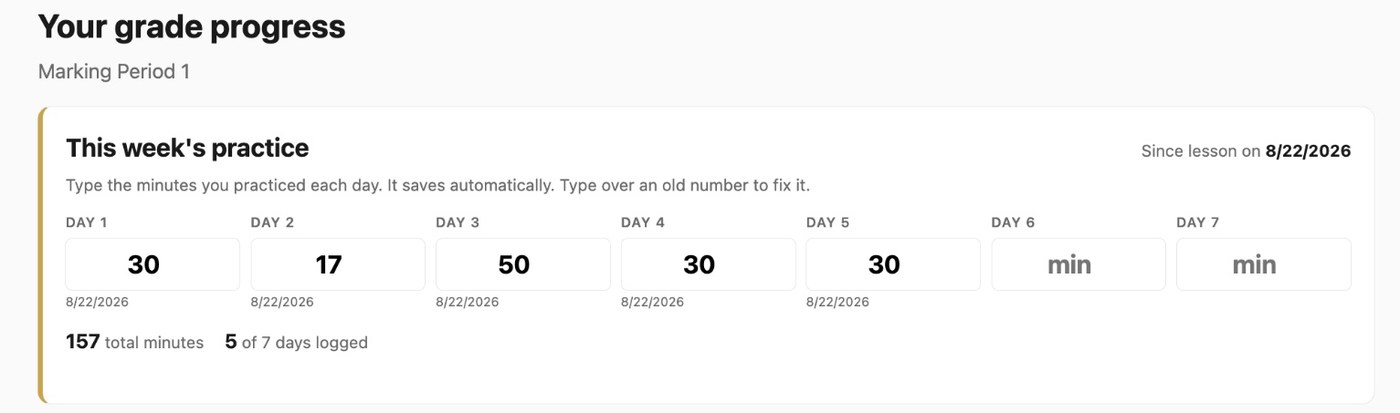
6Your digital lesson planner
Practice tracking, weekly grades, and parent sign-off all live in one place. To get there, go to www.polandcs.org ➤ academics ➤ Clubs & Activities ➤ PCS Band ➤ Lesson Planner and log in. It replaces the paper practice log — nothing to lose, forget, or forge.
7Independent Study Band
Students whose schedules do not allow a regular band period can participate through Independent Study Band. It is a full-year commitment with the same performance obligations as the regular ensembles.
- Rehearsal time is strictly adhered to. Once the meeting time is set, students are expected to be there.
- Lessons still apply. Students attend their scheduled applied lessons and make up any that are missed, following the regular lesson-attendance procedures (§5).
- Required performances: Winter Concert, Spring Concert, and Graduation. Additional performances may be added by request.
Mid-year enrollment & transfers
Students who join PCS mid-year and want to play in band follow a short vetting process so the ensemble stays cohesive.
- Referral. The Guidance Office notifies Mr. Brown that the student is interested in band or has played an instrument before.
- Meeting. Mr. Brown meets with the student to determine placement and next steps.
- Placement is by ability, not by grade.
- Transfer with a band-teacher recommendation from the previous school: the student is placed directly into an ensemble and the rotating lesson schedule.
- Willing but new to an instrument: the student joins a rotating lesson group and is taught fundamentals from the beginning level.
- Some ability, not yet rehearsal-ready: the student stays in lessons (with peers or in remediation) until Mr. Brown determines the student is prepared, or until the ensemble music is modified enough for the student to perform.
Mid-year students are added to the digital planner (§6) as soon as they are placed.
About Jazz Band
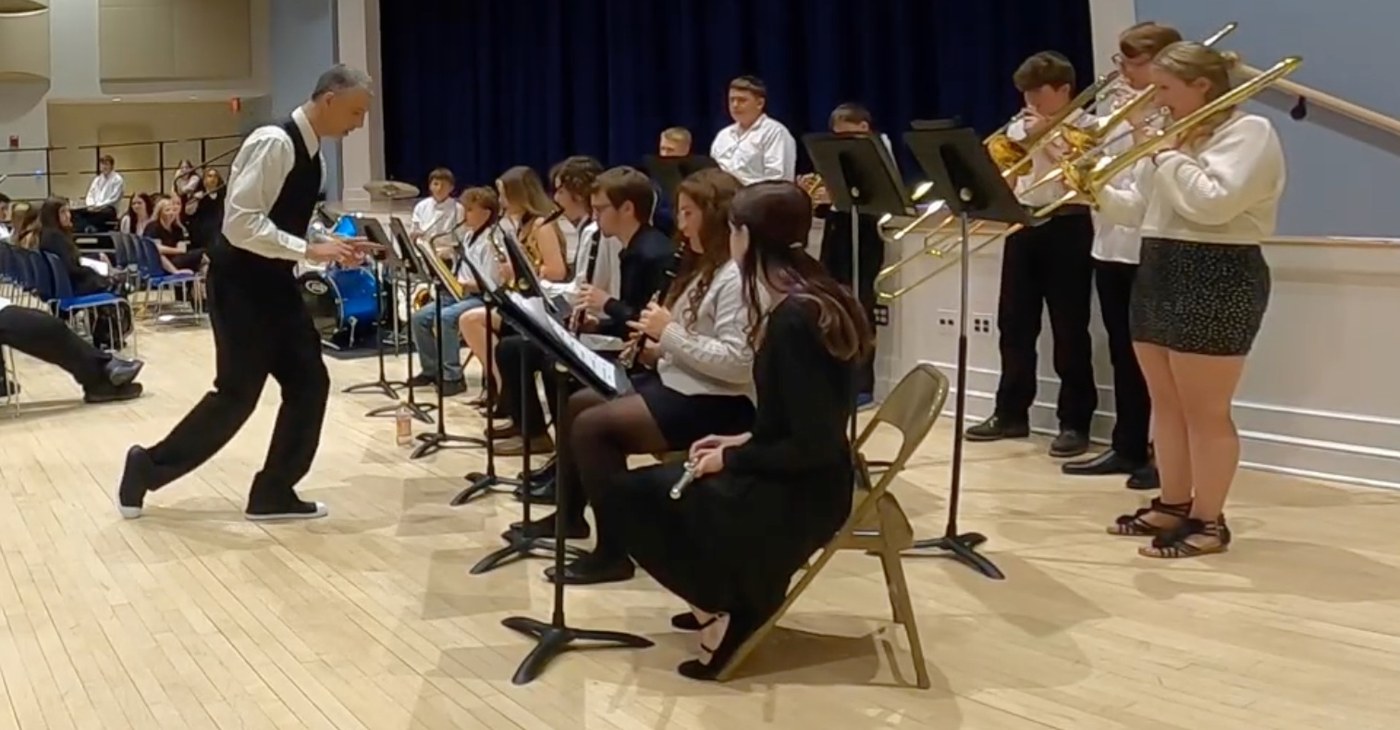
Jazz Band is an ensemble that goes above and beyond — students volunteer their time to rehearse and perform. Because of that commitment, Jazz Band is prime to perform at outside venues, not just school concerts. To join, students need to be proficient on their instrument and genuinely excited about playing in an ensemble that shows off their talents.